How to Choose the Right Wood Heater for Your Home

September 15, 2026

When the cold sets in across Bayside, there is nothing quite like the steady warmth of a real fire. A good wood heater can turn a chilly living room into the cosiest spot in the house, and for many Melbourne homes it is still one of the most affordable ways to stay warm through a long, damp winter. The trouble is that choosing one is not as simple as picking a model you like the look of.


There are freestanding units, inbuilt options, dozens of sizes and a fair few rules to follow along the way. Get it right and you enjoy years of reliable, efficient heat. Get it wrong and you can end up with a room that never quite warms up, a smoky flue, or a unit that falls foul of Victorian regulations.


At Almac Plumbing, we have spent more than 25 years installing and servicing heating across Bayside and the wider Melbourne area, including plenty of tricky woodfire jobs. This guide walks you through how to choose the right wood heater for your home, what to look for, and where the professionals need to step in.


Common Wood Heater Mistakes in Bayside Homes


Bayside winters are cold, grey and damp, and our housing stock is a real mix. You will find heritage weatherboards in Sandringham sitting beside modern rebuilds, draughty older homes in Cheltenham, and tightly packed townhouses in Hampton. Each one loses heat differently, which is exactly why there is no single best wood heater for everyone.

Heating is one of the biggest slices of a winter power bill, so the appliance you choose has a real impact on both your comfort and your costs. 


A few problems come up again and again:


  • Oversizing: A heater that is too big for the room gets run on a low, smouldering burn, which wastes fuel and clogs the flue.
  • Undersizing: A unit that is too small never really heats the space, so you stay cold and burn through firewood.
  • Poor installation: Flues that are too short or badly sealed cause smoke problems and, at worst, a fire risk.
  • Smoke complaints: On close suburban blocks, an inefficient fire can quickly become a neighbourhood nuisance.
  • Old open fireplaces: Lovely to look at, but they send most of their heat straight up the chimney.


Choosing well from the start saves you money and hassle and keeps you on the right side of the rules.


The Main Types of Wood Heater


Before you compare brands, it helps to understand the main styles on offer. Each suits a different home and layout.

Freestanding wood heaters sit out in the room on a hearth, with the flue running up through the ceiling or out through a wall. They are the most common choice, radiate heat in every direction, and suit open-plan living areas well.


Inbuilt wood fireplaces  (also called inserts) are built into a wall cavity or slotted into an existing masonry fireplace. An inbuilt wood fireplace gives you that classic fireplace look with far better efficiency than an open fire, and it frees up floor space, which is handy in smaller rooms.


Open fireplaces  are the traditional wood fireplace that many older Bayside homes still have. They are beautiful, but most of the heat disappears up the chimney. Converting an old open fireplace to a slow-combustion insert is a popular and worthwhile upgrade.


You will also see two ways that heaters move warmth around a room:


  • Radiant heaters throw out direct heat from hot surfaces. Great for warming a single, frequently used room quickly.
  • Convection heaters draw air around the firebox and push warmed air back out, which heats larger open areas more evenly.


Slow-combustion wood heaters, whether freestanding or inbuilt, are far more efficient than an open fire, so they are almost always the smarter long-term choice.


How to Size Your Wood Heater


Sizing is where many people go wrong. A wood heater's output is measured in kilowatts (kW), and the goal is to match that output to the space you actually want to heat, not the whole house.


As a rough guide, think about:


  • The floor area of the room or zone you want to warm.
  • Ceiling height, since tall or raked ceilings need more output.
  • Insulation and draughts. An older, leaky weatherboard needs more grunt than a sealed modern build.
  • How open  the space is to the rest of the home.


A small room might be comfortable with a 5 kW unit, while a large open-plan living area could need something closer to 15 kW or more. It is well worth getting advice rather than guessing.


Bigger is not better. Sustainability Victoria warns that a heater which is too large for its space has to be turned down, which reduces efficiency, creates more smoke and can foul the flue with creosote. In a Bayside home with mild shoulder seasons, an oversized unit is a very common and costly mistake.


If you are unsure, a professional can assess your layout, insulation and climate exposure, then point you to a unit that is the right fit.


Efficiency, Emissions and Wood Smoke


Modern wood heaters are cleaner and more efficient than the units of a few decades ago, and the rules reflect that. Every new wood heater sold in Australia must be tested to Australian Standards for efficiency (AS/NZS 4012) and emissions (AS/NZS 4013). 


According to Sustainability Victoria, compliant heaters carry a particulate emission limit of 1.5 g/kg or less and a heating efficiency of 60 per cent or greater. Look for the compliance plate on any unit you buy.


Efficiency is not only about the appliance, though. How you run it matters just as much:


  • Burn dry, seasoned hardwood. EPA Victoria recommends firewood with a low moisture content, ideally bought and stacked in spring so it is dry by winter.
  • Never burn treated or painted timber, driftwood or household rubbish. These create toxic smoke.
  • Run a bright, active flame rather than a choked, smouldering fire.
  • Put the fire out before you head to bed or leave the house.


This matters in Bayside, where homes sit close together. Wood smoke is a recognised health and amenity issue, and under Victoria's general environment duty you are responsible for keeping smoke from becoming a nuisance for others. 


Excessive smoke can be reported to your local council. A clean-burning heater on good fuel keeps you compliant, keeps your neighbours happy, and gives you more heat for every dollar of wood.

Getting a Compliant Wood Heater Installation


This is where a good idea becomes a safe, legal reality. In Victoria, wood heater installation is classed as mechanical services plumbing work. That means it must be carried out by a plumber who is registered or licensed with the Victorian Building Authority in Mechanical Services. You do not need a building permit to install a wood heater in Victoria, but you do need the right licensed installer.


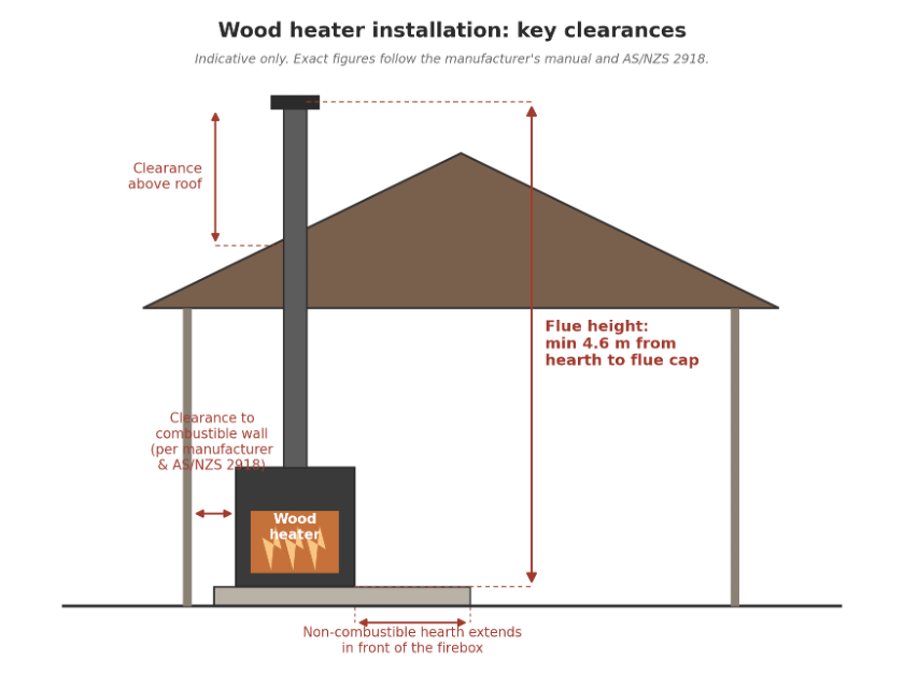
Installation is governed by Australian Standard AS/NZS 2918, which covers the safe placement of the appliance, floor protection, clearances to combustible materials, and the flue system. Get these details right and your heater burns safely and draws properly. Get them wrong and you risk smoke problems or fire.

A compliant installation typically considers:


  • Clearances from walls, furniture and other combustible materials, as set by the manufacturer and the Standard.
  • A non-combustible hearth that extends the required distance in front of and around the firebox.
  • Flue height. The flue generally needs a minimum height of 4.6 metres from the hearth to the flue cap, with adequate clearance above the roofline so the fire draws well and smoke clears the building.
  • Proper penetration kits where the flue passes through the ceiling, roof or a wall.


At Almac Plumbing, our woodfire installations are handled by fully licensed, insured tradespeople who know these standards inside out. We take on the complex jobs, including flue routing through tricky roof spaces, that some installers would rather avoid.


Because we are also gas fitters, we can help if you are weighing up wood against gas, or you would prefer a gas log fire. Any gas fitting work carries serious safety risks and must be done by a licensed gasfitter, never as a DIY job. 


If you are considering gas, our guide to gas appliance installations for Melbourne homes is a good place to start. Wood heaters also suit many commercial spaces, from cafes to offices, provided the same standards and licensing are followed.


When to DIY and When to Call a Professional


There is plenty you can do yourself, and a few things you should always leave to a licensed professional.


Safe to do yourself:


  • Researching and choosing a compliant unit and measuring your space.
  • Sourcing and seasoning good firewood.
  • Everyday care: emptying ash, cleaning the glass and keeping the area around the heater clear.
  • Booking your annual service before winter.


Leave it to the professionals:


  • The installation itself, including the flue, clearances and roof penetrations. In Victoria this is licensed mechanical services work, not a weekend project.
  • Annual servicing and flue cleaning to clear creosote, the combustible tar that builds up inside a flue.
  • Anything gas-related: Gas carries real risks of leaks, fire and carbon monoxide, so gas work is never a DIY task and must be done by a licensed gasfitter.

Honestly, the cost of a professional install is small next to the cost of getting it wrong. A poorly fitted flue can void your insurance and your heater's warranty and can put your home at risk. 


Almac Plumbing is fully licensed and insured, and we also look after general plumbing and domestic plumbing needs across Bayside, so you have one trusted team to call.


Al Mclean, Owner


“Almac Plumbing is owned and operated by Al Mclean, a qualified plumber and gasfitter with more than two decades of experience across residential and light commercial plumbing.

Based in Bayside, Al has built a reputation for taking on the jobs that others won't, particularly complex gas and woodfire installations. His problem-solving approach, clear communication and attention to detail have earned the trust of homeowners and builders alike.”


Frequently Asked Questions


Do I need council approval or a permit for a wood heater in Victoria?


You do not need a building permit to install a wood heater in Victoria, but the work must be done by a plumber licensed in mechanical services. It is also worth telling your home insurer once it is installed.


Can I install a wood heater myself?


No. Wood heater installation is licensed plumbing work in Victoria. A DIY install can be unsafe, may void your insurance and warranty, and can breach the regulations.


Are wood heaters better than gas?


It depends on your home, your access to firewood and your priorities. Wood heaters can be very cost-effective if you have cheap, dry firewood, while gas is cleaner and more convenient. We are happy to talk through both.


How often should my wood heater be serviced?


Once a year, before winter. Annual servicing by a mechanical services plumber clears creosote from the flue and keeps the unit running safely and efficiently. You can read more about our wood fireplace service in Bayside and Brighton.


What is the best firewood to burn?


Dry, seasoned hardwood with low moisture content. Buy it early and store it under cover so it is ready by winter. Avoid treated timber, painted wood and rubbish, which release toxic smoke.


Why is my wood heater smoking or not heating well?


The usual culprits are damp firewood, a heater that is the wrong size, or a flue that needs cleaning or was poorly installed. A service will usually pinpoint the cause.


Can I put a wood heater in a commercial space?


Yes, subject to the same standards and licensing. Cafes, shops and offices around Bayside can enjoy a wood fire too, as long as the installation is fully compliant.


Get Expert Help Choosing Your Wood Heater


Choosing the right wood heater comes down to a few clear steps: pick the type that suits your home, size it correctly, choose an efficient and compliant unit, and have it installed by a licensed professional. Do that, and you will enjoy warm, cosy Bayside winters for years to come, without the smoke, the waste or the compliance worries.


If you are ready to add a wood heater or you simply want honest advice before you buy, the team at Almac Plumbing is here to help. With more than 25 years of experience across Bayside and Melbourne, we handle everything from woodfire installations to gas fitting and everyday plumbing. Get in touch today to talk through your options and book a compliant, professional installation.

wood heater installation
lumbing and gas
By Brandon Caspersz August 11, 2026
Cut emergency call-outs across your Bayside portfolio. Almac Plumbing's plumbing and gas checklist helps property managers prevent breakdowns.
water leak
By Brandon Caspersz July 14, 2026
Hidden water leak in Bayside? Almac Plumbing uses non-invasive leak detection to find it fast, no wall damage. Licensed Melbourne plumbers, 25+ years.
toilet plumbing
June 9, 2026
Commercial toilet leaking or blocking? Almac Plumbing covers repair vs replace and high-traffic toilet installation for Bayside and Melbourne businesses.
split system air conditioner installation cost
By Brandon Caspersz May 13, 2026
Split system air conditioner installation cost in Bayside varies by size, pipe run, power and access. Almac Plumbing explains what affects your price.
gas leak detection bayside
By Brandon Caspersz April 14, 2026
Gas leak detection tips for Bayside homeowners. Almac Plumbing explains warning signs, safety steps and when to call a licensed gas fitter.
emergency plumber cheltenham
By Brandon Caspersz March 17, 2026
Expert after-hours plumbing triage tips from Bayside’s trusted plumbers. Almac Plumbing explains what to shut off and document in a commercial emergency.
Stainless steel commercial kitchen with pots, pans, and containers on a stovetop.
By Al Mclean August 17, 2025
Working Plumbing is Something We Take For Granted Until It Doesn’t Work. Contact Almac For All Your commercial plumbing & gas fitting Needs
Child in chimney sweep costume holding tools near a fireplace.
By Al Mclean August 17, 2025
Regular Fireplace Maintenance & Cleaning Is Important, Read Almacs Tips For Fireplace Cleaning & Call For An Annual Safety Inspection.
Patio with pool: Wooden chairs, barbecue, tiled floor, pool, and tropical foliage under a latticed roof.
By Al Mclean August 17, 2025
Discover Gas Heating Ways To Keep Your Outdoor Entertaining Areas Warm All Year Round - Talk To The Gas Heating Experts At Almac Plumbing.
Plumber using a wrench to repair chrome plumbing pipes.
By Al Mclean August 17, 2025
Be Aware Of The Three Most Common Commercial Plumbing Issues Faced By Melbourne Businesses And Know What To Watch Out For. 
Show More