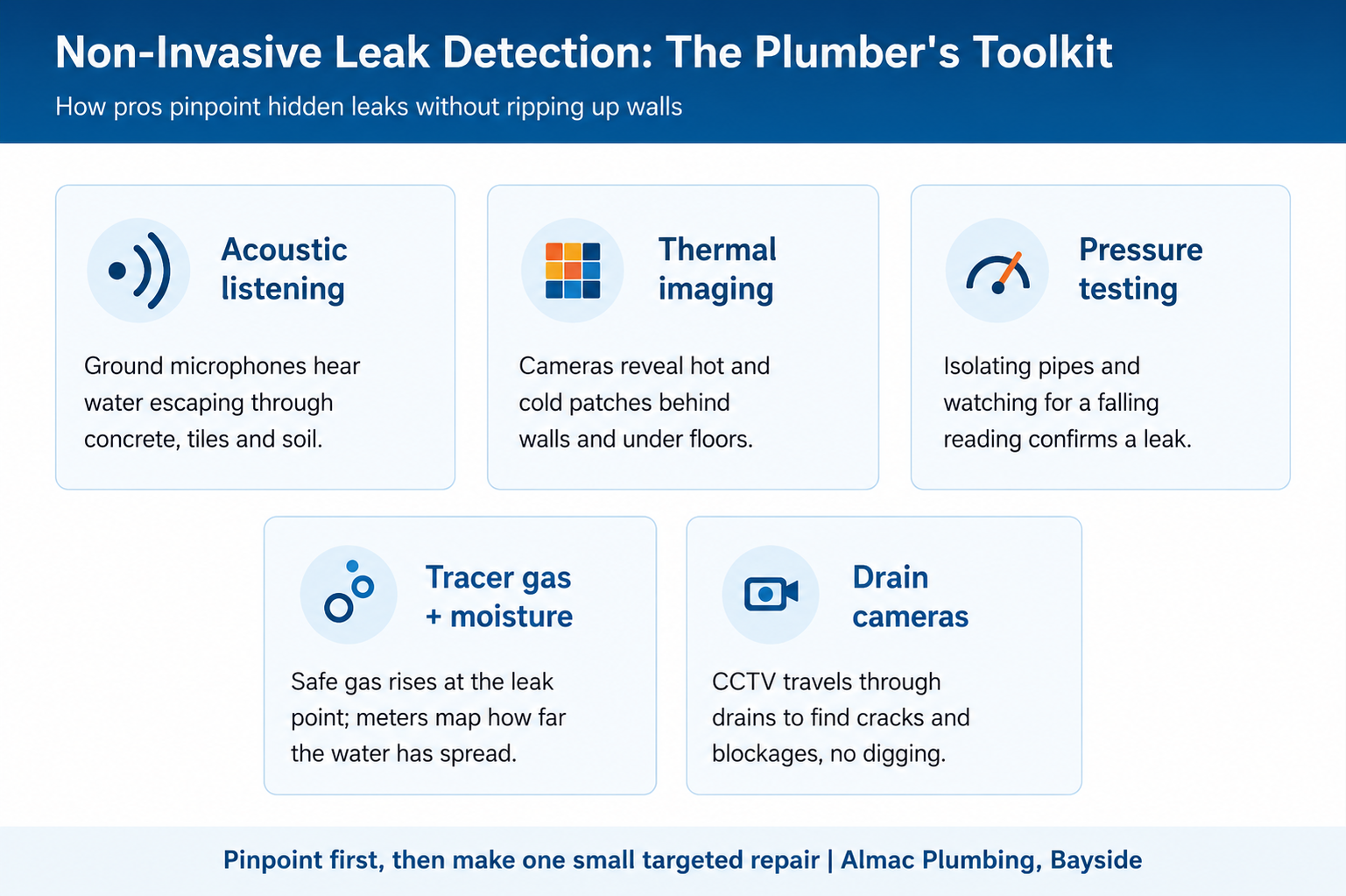
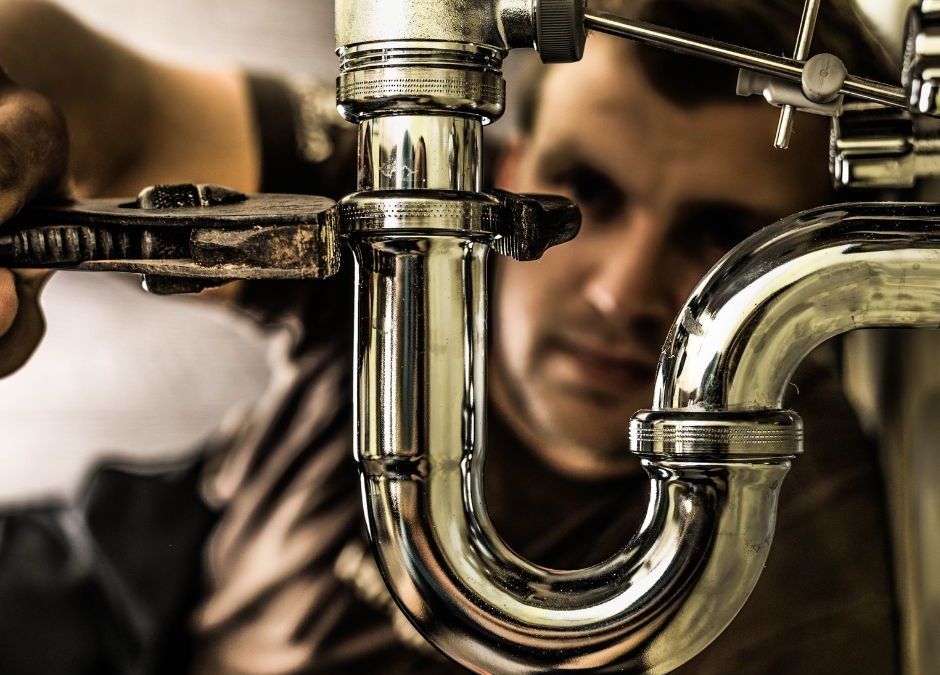
- Acoustic listening equipment:
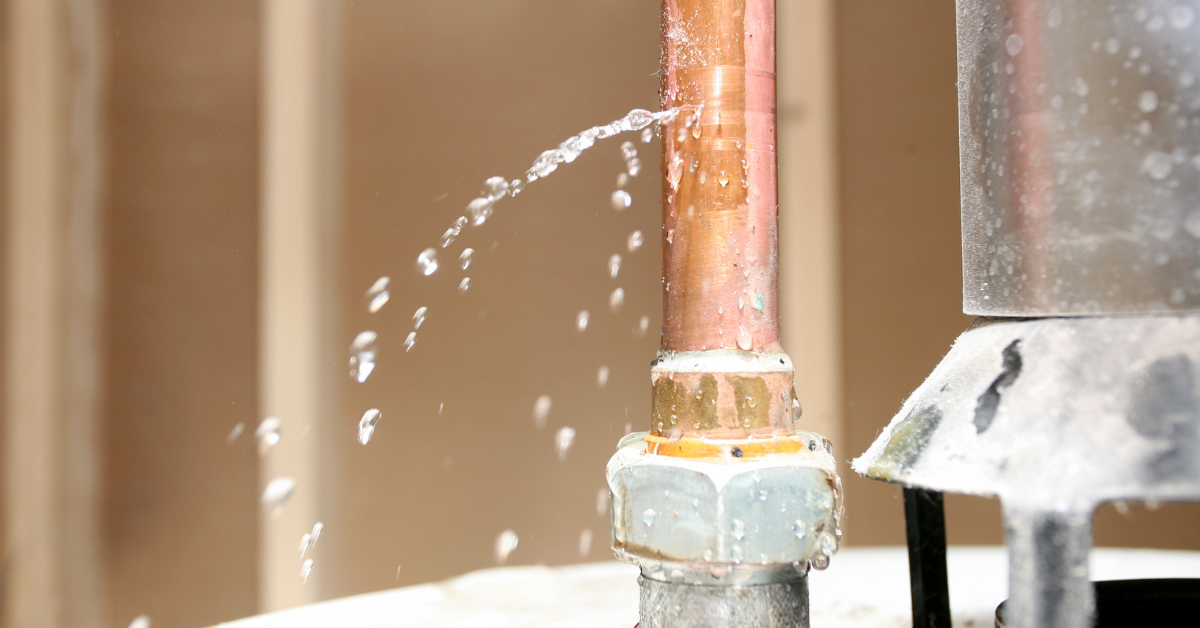
Pressurised water escaping a pipe makes a distinct sound. Sensitive ground microphones and listening discs let a plumber hear that sound through concrete, tiles and soil, then follow it to the source. It is one of the most accurate ways to locate a leak under a slab.
- Thermal imaging cameras:
A leak changes the temperature of the surface around it. Thermal cameras reveal these hidden hot or cold patches behind walls and under floors without a single hole. They are especially useful for tracing hot water pipe leaks.
- Pressure testing:
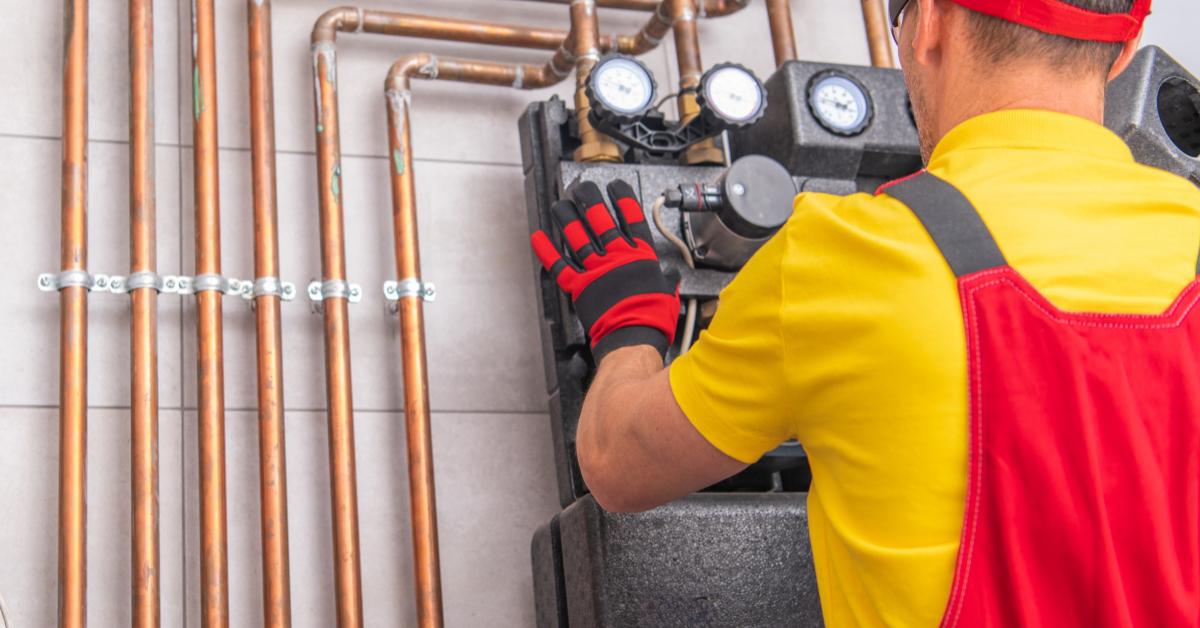
By isolating a section of pipework and watching the pressure, a plumber can confirm whether a leak exists and roughly where. South East Water describes a similar check using a pressure gauge on a garden tap, where a falling reading points to a leak on the property.
- Tracer gas and moisture meters:
For stubborn leaks, a safe tracer gas can be introduced into the pipe. It rises to the surface at the leak point, where a sensor detects it. Moisture meters then confirm exactly how far the water has spread.
- Drain cameras (CCTV):
For underground drains and sewer lines, a small waterproof camera travels through the pipe and sends back live vision. This finds cracks, blockages and root intrusions without any digging.
Used together, these tools let an experienced plumber find a leak with impressive accuracy. That means less mess, a smaller repair and a lower bill. It is a core part of our general plumbing service across Bayside.
During a typical visit, a plumber will ask about your symptoms, inspect the obvious suspects, then work methodically through these non-invasive tools until the leak is isolated. You should come away with a clear explanation of where the leak is, what is causing it and your options for fixing it before any repair begins. That transparency matters, especially when a landlord, tenant or owners corporation needs to sign off on the work.
Leak Detection for Commercial and Strata Properties
Finding a leak in a single home is one thing. Doing it in a multi-level office, a retail strip or a strata apartment block is another. The principles are the same, but the complexity rises.
In commercial and strata settings, a leak often crosses boundaries. Water from one unit can appear two floors down in another. Pipework may be shared, concealed in common property, or buried in a basement carpark. Working out who is responsible, and who pays, can be as tricky as finding the leak itself.
That is why non-invasive leak detection matters even more here. Pulling apart a shared wall or a tenant's fit-out is expensive and disruptive. Pinpointing the leak first keeps downtime and repair costs to a minimum.
A few things make commercial and strata leak detection more demanding:
- Multiple water meters and complex pipe runs across levels.
- Live tenancies that cannot simply shut down for repairs.
- Owners corporations and property managers who need clear reporting.
- Insurance claims that hinge on a documented cause.
A clear, written diagnosis helps everyone involved make decisions and resolve cost-sharing fairly. If a leak is causing an after-hours emergency for a business, our emergency triage guide for Cheltenham businesses explains how to limit the damage before help arrives. You can also learn more about our commercial plumbing work, while homeowners can explore our domestic plumbing services.
What Hidden Leaks Really Cost (and How to Save)
Leaks are expensive in two ways: the water you pay for, and the damage you do not see until later.
The numbers add up faster than most people expect:
- A leaking toilet can add more than $425 a year to your bill, and a serious one can cost $3,000 or more, according to South East Water.
- A single dripping tap can waste around 20,000 litres a year.
- Water damage to flooring, cabinetry and structure can run into many thousands of dollars to repair.
The good news is that early action keeps costs down.
Here are some honest, practical ways to save:
- Read your meter monthly. Note the numbers, and watch for jumps you cannot explain.
- Do the toilet test. Place a sheet of dry toilet paper at the back of the bowl. If it is wet a few minutes later, the cistern may be leaking.
- Fix dripping taps promptly. A worn washer is cheap, and you can often replace it yourself.
- Keep your contact details current with your water retailer so leak alerts reach you.
- Ask about a high usage review. If a hidden leak caused a spike, South East Water may review the bill under its guidelines once the leak is repaired.
A little prevention also goes a long way. Servicing your hot water unit, replacing ageing flexible hoses every few years and keeping an eye on your water pressure all reduce the odds of a surprise leak and a nasty bill.
We would rather help you avoid a big bill than chase one. Sometimes the right advice is a five dollar washer, not a service call.
When to DIY and When to Call a Professional
Plenty of small jobs are fine to tackle yourself. Others are best left to a licensed plumber, both for safety and because Victorian law requires it.
Safe to try yourself:
- Reading your water meter and doing the toilet paper test.
- Replacing a worn tap washer or a simple cistern part.
- Clearing a visible blockage in a sink strainer.
- Tightening a loose, accessible fitting by hand.
Best to call a professional:
- Any leak you cannot see or reach, including under slabs and behind walls.
- Hot water system leaks.
- Leaks affecting more than one unit or tenancy.
- Anything involving gas. Never attempt gas work yourself.
- Work valued at $750 or more, which must be done by a licensed plumber who lodges a compliance certificate.
In Victoria, plumbing is regulated for good reason. Licensed plumbers must meet set standards, and certain work has to be certified. You can check any plumber's licence through the Victorian Building Authority, and find accredited tradespeople via Master Plumbers. Almac Plumbing is fully licensed and insured, so every job is done to standard.
Frequently Asked Questions
How Does Leak Detection Work Without Damaging My Property?
Professionals use a combination of acoustic listening gear, thermal imaging, pressure testing and tracer gas to pinpoint a leak before opening anything up. Once the exact spot is known, only a small, targeted repair is needed rather than exploratory demolition.
How Can I Tell If I Have a Hidden Water Leak?
Common signs include an unexplained rise in your water bill, the sound of running water when taps are off, damp patches, mould, warm spots on the floor and a garden area that stays wet. A high usage alert from your water retailer is another strong clue.
How Much Does a Hidden Leak Cost Me If I Ignore It?
More than you might think. A leaking toilet alone can add hundreds or even thousands of dollars to your annual bill, and water damage to your home can be far more expensive to repair than the leak itself.
Is the Leak My Responsibility or the Water Authority's?
Generally, you are responsible for pipes on your side of the meter, while South East Water looks after the meter and the pipes from the street to it. If you think the leak is on their side, contact them to investigate.
Can I Just Wait and See If It Gets Worse?
It is rarely worth the risk. Leaks almost never fix themselves, and every day adds to the water wasted and the damage done. Early leak detection is almost always cheaper than a delayed repair.
Do I Need a Licensed Plumber for Leak Repairs?
For anything beyond a minor washer change, yes. In Victoria, plumbing work valued at $750 or more must be carried out by a licensed plumber who issues a compliance certificate.
How Long Does Professional Leak Detection Take?
Many residential jobs are located within a couple of hours, though complex commercial or strata sites can take longer. Pinpointing the leak first is what keeps the overall repair quick and tidy.
Trusted Leak Detection Across Bayside and Melbourne
Hidden leaks are sneaky, but they are not unbeatable. With the right tools, professional leak detection finds the source quickly and accurately, usually without disturbing your walls, floors or daily routine. The earlier you act, the less you spend and the less damage you face.
If you have noticed a creeping water bill, a damp patch or the faint sound of running water, do not wait for it to get worse. Almac Plumbing has spent more than 25 years finding and fixing leaks for homes and businesses across Bayside and wider Melbourne, and we are fully licensed and insured.
To book an inspection or ask a question, contact Almac Plumbing today. A quick check now could save you thousands later.